Wednesday, October 26, 2011

NHESP 2011 Update 7

Greetings all!
Sorry for the delay, but I am sure you can all understand that life on expedition is busy. In light of that, I will do my best to update all you fine folks back at home on the wild adventures of the past week or so.
            In Zuleta (which is where I believe I concluded my last update), we worked hard for the entirety of the day on constructing our leather sheathes—the final step in the long, yet rewarding process of creating our knives—choosing the pattern, cutting the leather, and softening its coarse texture with the cool touch of water and molding it with our hands. Under the learned guidance of German, at the conclusion of the day, we each had created our own, beautiful knife sheathes, and some of us even began the process of making our machete sheathes as well.
            We spent one last night in Zuleta, all cuddled in German’s bread-making room, surrounded by good food, good company, and song. The next morning we departed for the first day of our bike expedition during which we began our ascent into the high Andes. We biked around 30 kilometers that first day and learned firsthand how truly uncomfortable it is to bike mile after mile on cobblestone roads; the result was an extreme case of some very sore butts. Despite that small misfortune, we got the chance to enjoy bizcochos, hot chocolate, and cheese, which is a typical Ecuadorian meal, during a rest stop in a small town along the way.
            Before night fell, we reached our destination, Guachalá, the oldest hacienda in Ecuador. While enjoying a warm dinner provided by the hacienda (for which we were grateful), we learned that Guachalá hacienda has been in existence since the earliest time that Ecuador was colonized by the Spanish. At one point, it was run entirely by a woman, which was quite revolutionary considering the time period.
            We spent a comfortable night camping in the courtyard of the hacienda. The following morning, we were on the road again for a much more challenging day of cycling mostly uphill, on mostly volcanic gravel. The next day followed suit as we continued to travel up and up the mountains. The trail became so steep and gravelly in some places that Thomas called our uphill cycling “pushes” meaning that we would end up having to push our bikes up parts of the Andes.
            On the last few days of our bike journey, however, our efforts of pushing ourselves, and sometimes our bikes, up the seemingly never-ending curves and dips of the Andean mountains, were rewarded by an extremely pleasurable night at the hot springs in Papallacta. We soaked our sore muscles in the healing waters that sprang up from the depths of the earth. It was quite a treat considering that the following day was an audacious one. We bicycled more than 100 kilometers; excluding a 7 kilometer ascent, most of the ride was downhill. It would be our first descent into the jungle, our first taste of the Amazon.

            Although the journey was a challenging one, and toward the end, we were biking at night guided only by the light of our headlamps and drenched by the sweet jungle rain, we were giddy and joyful with the newness of the climate surrounding us. We even stopped for a time at a small convenience store with whose owners Marcea made quick friends. Before we knew it, in exchange for the kindness of the owners—a dry place to stop and rest—we helped the store owners in loading countless cases of beer into a truck to be shipped off; certainly a memorable encounter.
At the end of the very wet, dark bike ride through the Ecuadorian jungle, we were sure we had reached our destination—a piece of land newly bought by Marcela’s parents—and then we realized . . . we had made a wrong turn.
            “I am in shock,” were the only words that Thomas could muster up in such a situation as this. Without a doubt, we all felt the same. We were exhausted from five days of biking. It was 11 o’clock at night, and our energy level was low. Yet our spirits were still high, so we turned around and continued on, feeling our way through the dark and the mud of a random back road in the jungle.
            At the conclusion of perhaps the most intense day of biking we ever experienced, we enjoyed a warm dinner and the warm hearts of our companions, and eventually, to everyone’s delight, our warm sleeping bags.
            Our final day of biking was separated by a day’s layover at the piece of land we had come to rest upon the previous night—spending the day journaling, washing our clothes, and soaking ourselves in the cold, refreshing water of the jungle river near our campsite. We left the next morning to embark on the last day of the bike trip, experiencing the true power of the jungle sun as we continued on to our final destination: the commencement of the river portion of our expedition. Luckily, because we crossed quite a lot of rivers throughout that last day of bicycling, many of our stops included a swim break, which was a fine antidote to the strength of the sun. 
   Just as the sun dipped behind the gentle jungle hills, we reached our campsite. And now it is time to discover the new world of the water and say good-bye to our trusty companions—the bikes.


Monday, October 17, 2011

NHESP 2011 Update 6

Dear readers,

On Wednesday, October 3, our band of merry travelers departed the warm comfort of our home at Palugo to experience, in its intricacy, the various climates and cultures of Ecuador—highlands, mountains, jungle. Our first destination was San Clemente, a small village nestled in the mountains. It was also a special destination as it is the home of our dear group member, Roberto. After catching a bus in Pifo and enjoying a very long, very bumpy bus ride, our group arrived in San Clemente and departed to the various families who were kind enough to welcome us weary vagabonds into their homes. Hila and Hytham resided with Jorge—an excellent local baker. One morning Hila and Hytham were even able to awaken to the pleasure of making bread, digging their fingers into the soft flour of the bread dough as they learned to bake bread following Jorge’s own, unique recipe. Kestrel and Clayton stayed with Juan, where they had the firsthand experience of living on a small family farm in Ecuador. Zoe, Robert, and I all lived with Jaime and Maria, who manage their own small farm, as well as a small store, “for the community,” as Jaime said. And finally, Nelly, Leah, Leo, Noah, Ezra, and Isabelle (now affectionately known as Isa), stayed with Naty, in the house that commonly became known as the party house.
            For the next three days we were truly immersed in the culture of San Clemente—sharing and aiding in the creation of each meal with our families, until, by the end of our stay in that incredibly special, beautiful village, we felt as though we had each gained an entirely new, Spanish-speaking family in the highlands of Ecuador. We even were able to all join together to play futbol (soccer) at the local escuela (school)—a game during which Thomas and Marcea showed no mercy.
            One of the highlights of our stay in San Clemente, however, was the opportunity to learn embroidery from the women of the village, who were quite skilled at the craft. At the end of the day, thanks to the patient guidance of our host mothers, we were able to embroider the shirts we will be wearing for graduation. All are adorned with symbols that we hold close to our hearts.
            At the conclusion of our stay, we formed a goodbye circle with our families at Roberto’s parents’ house and departed for our next destination—the base of Imbabura. We spent the majority of the day climbing up and up and up, and despite the heaviness of our packs, we arrived in time to set up a beautiful camp next to a water source fed by the mountain. The site was nestled in a pine grove at the bottom of a small valley. Although making a fire at such high altitude was certainly more difficult than doing so back in Palugo or at Kroka in New Hampshire, we were able to enjoy a warm dinner that night during which we learned of our next challenge as a group—a group solo. During this undertaking , our dear teachers, Thomas and Marcea, would be departing from us, and we would be on our own, deciding where to adventure to next; a choice entirely our own as long as we were able to reach Zuleta, the next village we were to visit, by noon two days later.
            In the end we chose to hike Cubilche, a beautiful dome-shaped mountain, and set up our home for the night at its summit. Although the day was a long one, interspersed with periods of both chilly rain and the scorching heat of the sun, as well as the fact that we were not able to keep an adequate cooking fire burning because of the lack of dry wood, we enjoyed a meal all together, snuggled up under a tarp staked down by our machetes, next to a lake on the top of a volcano surrounded by the cloud—we felt happy, we felt loved, we felt at home.
            We spent all of the following morning navigating our way through mountains, fields, and farms to Zuleta, the village of German,* a master leatherworker and close friend of Marcea and Thomas. Along the way, we had to ask directions from a few friendly horsemen, farmers, and fellow travelers, but eventually we reached our destination. We enjoyed a lunch, reunited with Thomas and Marcea at German’s*, and settled into our second round of homestays. German helped us make the sheaths for our knives, which all turned out very beautiful, if I may say so myself.
            Although it is now a few days since our stay in Zuleta, and we are currently in a place far from there, I must draw this update to a close because of the full life of our group on expedition and leave you all in a state of wondering as to our current whereabouts. But be assured that we are happy, we are together, we are one in heart and soul.

*Yes, that is really his name.


Wednesday, October 5, 2011

NHESP 2011 Update 5

For us here at Hacienda Palugo, this past week has been full of discovery and excitement. At the start of the week, we took an herb walk with Marcea, learning the medicinal properties of native Ecuadorian plants as well as a few that are common to our home forests in North America. We took in the sweet, aromatic scent of lavender, the complex and beautiful passionflowers, and the useful yet dainty, chamomile flowers, and all the while Kestrel, our medic, gathered various herbs for future teas, tonics, and salves.
We spent Wednesday with Michael Dammer, the brother of Thomas and Matthias. He directed us through quite the patch of thorny vegetation so as to properly show us the geography of Palugo. We learned that at one time, Palugo spanned as far vertically as Pasochoa (a nearby mountain and extinct volcano we would climb the following the day), but because of a volcanic eruption, Palugo is now roughly half the height it used to be. We even got the opportunity to do a bit of rock climbing in the process—lowering ourselves down through a crevasse in the rocky cliffs surrounding Palugo. And our reward for doing so was great, for we were able to observe cave paintings created by some of the early people who inhabited the area.  After a lovely morning of hiking through the vastness and diversity of Palugo’s geography, we ended by caving through the tunnels— used for irrigating the farm— underneath Palugo’s cliffs. Our way illuminated only by the light of our headlamps, we sloshed through the icy water lining the tunnels whilst observing the layers of rock of which the tunnels are composed—a physical timeline of Palugo’s history. 
Our journey ended with “the graduation tunnel,” as Michael called it: a small opening in the rock, the majority of which was filled with ice-cold water. And on our bellies and knees, most of us, simultaneously swam and crawled our way through the tunnel; an experience we will surely never forget.
Considering that our day had been filled with such excitement and adventure, it came as no surprise that our evening followed suit. We were welcomed with warmth and kindness into the kitchen of Thomas, Matthias, and Michael’s mother, Adella, to learn some traditional Ecuadorian cooking. Slowly but steadily we reduced las papas (potatoes) to mush for el sopa de las papas; all the while adding spices, seasoning, and various vegetables under Adella’s kind yet watchful eye.
Our next creation was quimbolitos, a traditional Ecuadorian dessert made of corn flour, egg whites, sugar, and anise, which we sampled in Quito with Matthias and Nicole, although Adella’s recipe proved for a much more delicious treat. However wonderful all those ingredients sound, the manner in which you cook quimbolitos is what creates the savory flavor of the cakes: You must steam them in atzera leaves (a native Ecuadorian plant) without wrapping the leaves too tightly around the cake batter (a task that many of us took a while to get the hang of) so that the cakes might grow and expand when steamed.
At the end of the day we all gathered on the porch of Adella and Papa Francisco’s house to enjoy the cool Ecuadorian night, surrounded by the pleasure of fine company and warm, delicious food filling our stomachs.

The following day was yet again action packed as we carried out our plan to summit Pasochoa—a mountain whose height is only 2,000 meters less than Cotopaxi and whose many cliffs, plants, and rocks amazed us with their beauty. Although it was hard at first to find a pace that worked for everyone, and several of us had difficulties with the altitude, in the end we all reached Pasochoa’s summit together—a community, tired, yet unbroken. We enjoyed our lunch in that beautiful space: On our right was the drastic drop of Pasochoa’s cliffs into the jungle, a land dotted with lush green flora, and on our left was the challenging way we had come, through thick grasses with roots that stretched deep into the mountain’s rocky soil. As we reveled in how far we had climbed, Hytham, our fire and wood manager, provided us with the warmth and beauty of a fire—a practice that he hopes to continue as we embark on our coming expeditions. 
Closer to home, however, I can proudly say that we have all created our very own knives! Although the process was long and sometimes tedious, in the end we all became masters of the proper use of rasps, saws, clamps, and sandpaper in order to create something unique—something very much a part of ourselves that will indubitably aid us in our journeys ahead. We constructed our knife handles from birch burls, an extraordinarily strong material, which is challenging to carve. In addition, we made wooden sheaths for our knives, which will later be covered in leather after we learn that craft at the village of Zuleta during our upcoming expedition.
Finally, to conclude a truly eventful week, on Saturday we voyaged to Tatoo to make our pants. With the help of the very kind and thoughtful women who work in Tatoo’s factory, we cut out each individual piece needed to construct the pants and then aided the women in the actual construction of the pants, although they were far more competent in using the sewing machines than we. In fact, we were so used to the temperamental sewing machines at Kroka in New Hampshire that we found the commercial ones used at Tatoo almost too precise and thus unwieldy. And yet, at the end of the day we all were able to proudly and gratefully sport our brand new, custom-made, chocolate brown (a fine choice of color chosen by Marcea), quick-drying pants. Tatoo was even kind enough to gift us with very stylish, useful belts, for which we are incredibly grateful. 
As the past week draws to a close and the new one is just blossoming, our community is preparing for the three-week expedition ahead. During our expedition we will be experiencing the true breadth of Ecuador’s geography—journeying from the highlands to the jungle and everywhere in between. We will enjoy the challenges of biking a portion of the trip through a mountain range and down to the jungle as well as rafting and paddling down the Yatunyaku (a tributary to the Napo River). We also look forward to the challenge of merging our close-knit group into the communities of the villages we will visit along the way.


Quote of the week: “The graduation tunnel!”
Spanish of the week: quimbolitos—an Ecuadorian dessert made of corn, egg white, and sugar

Tuesday, September 27, 2011

NHESP 2011 Update 4


¡Buenos dias a todos! I write to you while cradled between the purple mountaintops of Palugo Farm, Ecuador, surrounded by the steady presence of the eucalyptus trees and feeling the clear mountain air circulate throughout my body. We, the 2011 New Hampshire-Ecuador semester students, are finally in Ecuador! Our flight, though long, was pleasant, during which we enjoyed a knitting lesson from our own Mama Lisl and even joined hands to sing our gratitude for our lunch, regardless of the skeptical glances from other passengers. When we landed in Quito, we reveled in the sensation of being somewhere completely new, somewhere where the common language was not one that we had known since birth; somewhere to open a new chapter of our lives.
            When we reached Palugo Farm, we were greeted by a warm dinner and the even warmer company of the Dammer family, as well as a new addition to our semester family, Roberto, who will be a student-apprentice with Hannah throughout the remainder of our semester. After enjoying one of the most delicious dinners I have ever experienced, we headed off to our cabañas, which are beautiful adobe structures covered with eucalyptus and bamboo, complete with mattresses for each of us—a luxury for which we are grateful (the girls’ cabaña is even equipped with bunk beds). Each morning we walk out of our cabañas onto a porch on which a vibrantly colored hammock always swings and look out at the vastness of the farm fields and mountains.
            Although we have been taking it easy for a few days as our bodies adjust to the altitude, our time in Ecuador has been brimming with adventure and excitement nonetheless. On the first day, Mathias showed us around Palugo, the hacienda of the Dammer family. We relished in the new sights and sounds of Ecuador—savoring the sweet tomatillos in the garden and running our hands over the sleek, silky fur of the guinea pigs. We toured the newly completed house of Thomas and Marcea, which we all agreed is one of the most beautiful houses we have ever seen. For our midday meal, we dined at Thomas and Mathias’s parents’ house enjoying the shade of the towering cyprus trees that seemed to stretch their branches as far as our eyes could see.
The next day we hiked to Pifo, the little, but lively city in the dusty valley below Palugo Farm. Our journey was one of contrast: As we traversed the steep rocky trail to our destination, we braved many thorny plants that tore at our clothing and skin, but part of our path was lined by the serene presence of bamboo and century plants (Agave americana), holding us as we walked to the steady rhythm of a waterfall.
            When we reached Pifo, we split into five groups and set out to explore the city, our prime intent being to purchase the famed Ecuadorian rubber boots (las botas coucho) and canvas shoes for those of us who needed them. We thoroughly enjoyed conversing with the shopkeepers solely in Spanish, and some of us, Ezra and Hytham specifically, entered into some heated haggling. In the end, we were each able to sport our very own comfortable, flexible rubber boots. For lunch, Mathias treated us to empanadas—an Ecuadorian delicacy made with plantain flour and sweetened with pineapple juice.
            Another adventure followed on Sunday when we journeyed to the capital city of Quito. Up and up through the mountains we voyaged in the minivan with Victor—the most skilled driver I have ever ridden with—while Mathias’s wife, Nicole, taught us the history of the city. Vibrantly painted buildings of brick, plaster, and rocked flashed past our eager eyes until we reached a park that was brimming with art exhibits and native plants. We wandered around in the sheer beauty of the place for a time, taking in the sweet smell of the flowers and the rich artwork surrounding us. Our next stop was Quito itself, in which we visited a market, learned about the architecture of the city from Nicole, and enjoyed delicious, traditional Ecuadorian food.
            Our final destination in Quito was Casa del Alabado—Museo de Arte Precolombino, a museum of prehistoric South American history, focusing on the connection between the four worlds—the underworld, the world of the material, the world of the present, and the afterlife. We received a guided tour, kindly translated by Nicole, which told of the history and customs of the ancient peoples who inhabited Ecuador: the purpose and role of the shamans, the roles of men and women, and the techniques used to create tools, art, and jewelry. One part that stuck out in particular to all of us was that the women, after giving birth, would be forced to return to work while the men rested and raised the newborn child. We all thought this custom extremely amusing. However, we also learned that people born into this ancient culture with disfigurements or handicaps were considered sacred and were believed to have a special, important medicine to share with all—how beautiful!
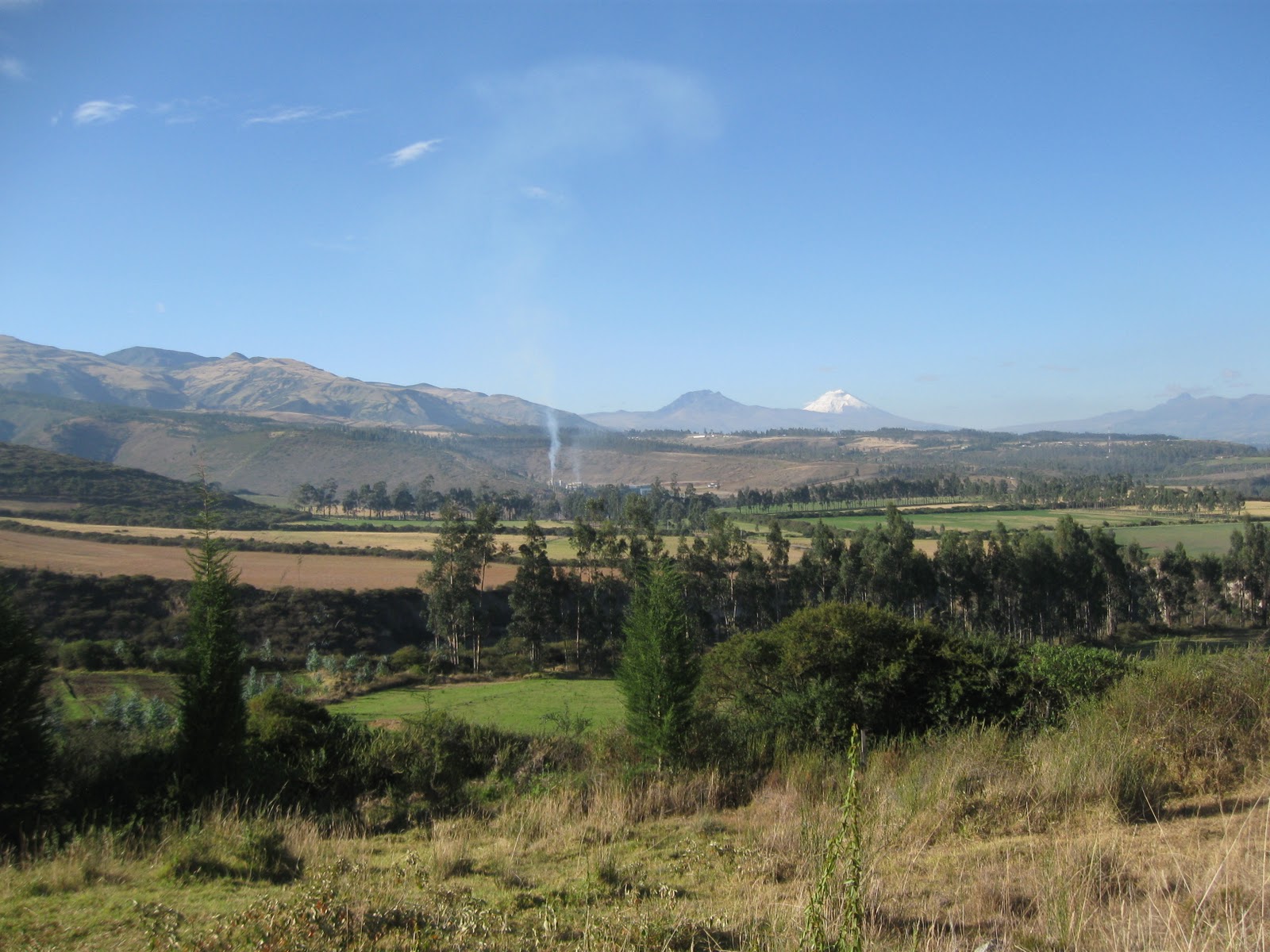
            Although our time in Ecuador has just begun, we are alive with the beauty of all that is around us—the richness of the mountain grasses, the snowy top of Cotopaxi that we see just outside our window, the gentle presence of the horses and cows—enticing us to the excitement of future adventure. And into all adventures we step forward together—as a community.

Quote of the week: “Why does everything have thorns? The plants have thorns, the leaves have thorns . . . even the thorns have thorns!”
Spanish of the week: las botas coucha—rubber boots 

Messages home:
Nelly: “Mom, tell Carol to tell Jeff to write to me again.”
Kestrel: “Mom and Dad, I love you and miss you muchos. It is so beautiful here.”


Wednesday, September 21, 2011

NHESP 2011 Update 3


Quote of the week: “Goodnight Kroka!”
Miscommunication of the week:
Noah: “Awww, shoot my necklace broke!”
Ezra: “Your knife broke?”
Noah: “Yah . . . my neck broke . . .”

This past week has felt as though it is the last push before the plunge—the plunge into Ecuador; the plunge into adventure. As we have been gearing up for our journey, we have also been working on a number of projects around the Kroka camp. One project was adding flooring to the upstairs of the carriage barn (that way when someone sweeps the upstairs a substantial amount of dust will no longer leak down to the first floor, which is always a good thing). This undertaking of ours was aided and overseen by the calm, disciplined hands of Hugh—a truly amazing carpenter who was kind and patient enough to teach us such skills as squaring boards, planing, how to properly use a handsaw, and so much more. As transient as his presence was within our community, it was sincerely appreciated by each and every one of us. Some members of our community seem to have a budding aptitude for carpentry—Robert’s dexterity with the plane never ceases to amaze me, and Clayton’s efficiency in measuring, squaring, and laying down a board was impressive.
In addition to the carriage barn, we have also been putting a prodigious amount of energy into creating a map of Kroka, which when finished, will be displayed in the office for all to see. Although it has been a stressful process and has tried our ability to work together as a group, in the end we have gained so much in community—our capacity to communicate our needs and wants to one another, our capability to compromise—and have come to the pleasing realization that we can accomplish much more in community than individually. To complete the map in the most efficient way possible, we split our group into various task forces. Hila, Isabelle, and Zoe were in charge of creating a general outline for the map, and Nelly was responsible for making the map creative and expressive. Leah and I had the pleasure of designing a logo for Kroka and then wood-burning it into part of the frame—gently
pressing the wood-burning tool until the wood sizzled and the image of our creation was imprinted in the grain of the wood. Hytham, Noah, and Leo worked tirelessly on constructing a frame built from a beautiful piece of cedar carved by Mathias, a long, unwinding piece of birchbark, two shorter strips of birchbark, and a flowing, wooden top-piece created by Noah on which the logo was burned. And when the map was nearly complete, Isabelle, Ezra, and Hila did a magnificent job at watercoloring our week’s work—mixing blues and greens to create entire forests from a drop of paint; swirling reds and yellows to express the beauty of our dwellings.


Yesterday, we spent the day with Misha on the Deerfield River learning the basics of whitewater canoeing to help us prepare for the rapids on our river trips in the Amazon. The day was filled with exploration and laughter while we navigated through the challenges of the waters. Many of the rapids had shifted during the hurricane and were
now entirely new to Misha, as well as to all of us. At times the ever-changing whims of the waters tried to overtake us, and a few canoes were flipped (Leah and Nelly held the record at four), but we paddled strongly and even had time to watch a lone beaver squatting on the riverbank. At the end of the day we emerged dripping but smiling at the pull-out and headed home to be greeted with a warm, comforting dinner at Lynne and Misha’s—our hearts and hands kindled by scrumptious burritos; our spirits burned with the pleasure of company and community.

Last but not least, this past weekend we had the pleasure of our families and friends joining us at Kroka. We shared our life with them and got spoiled with wonderful food and lots of love. Thank you parents, for your support and making this amazing journey happen for us. 

Standing on the edge of discovery, more ready than ever to embark on the journey of a lifetime, we cannot help but feel the hum and buzz of exploration in our feet; in the depths of our souls. We step forward as a community—with hearts, minds, and intentions interconnected. In such an invigorating time, a poem created by our very own Leah comes to mind:
I am a spirit of fire
Of rhythm and love
My life goes on an endless song
and tell me, why should I keep from singing?
My love, let us dance!
Let us free our bodies
from ourselves.
Do you see this tree?
Let us all be this beautiful tree
It flows and it grows
together with you and me.
Let us be like this bird
who lets go of fear.
Let loose your soul
and take the jump.
Spread your wings out wide,
and love yourself.